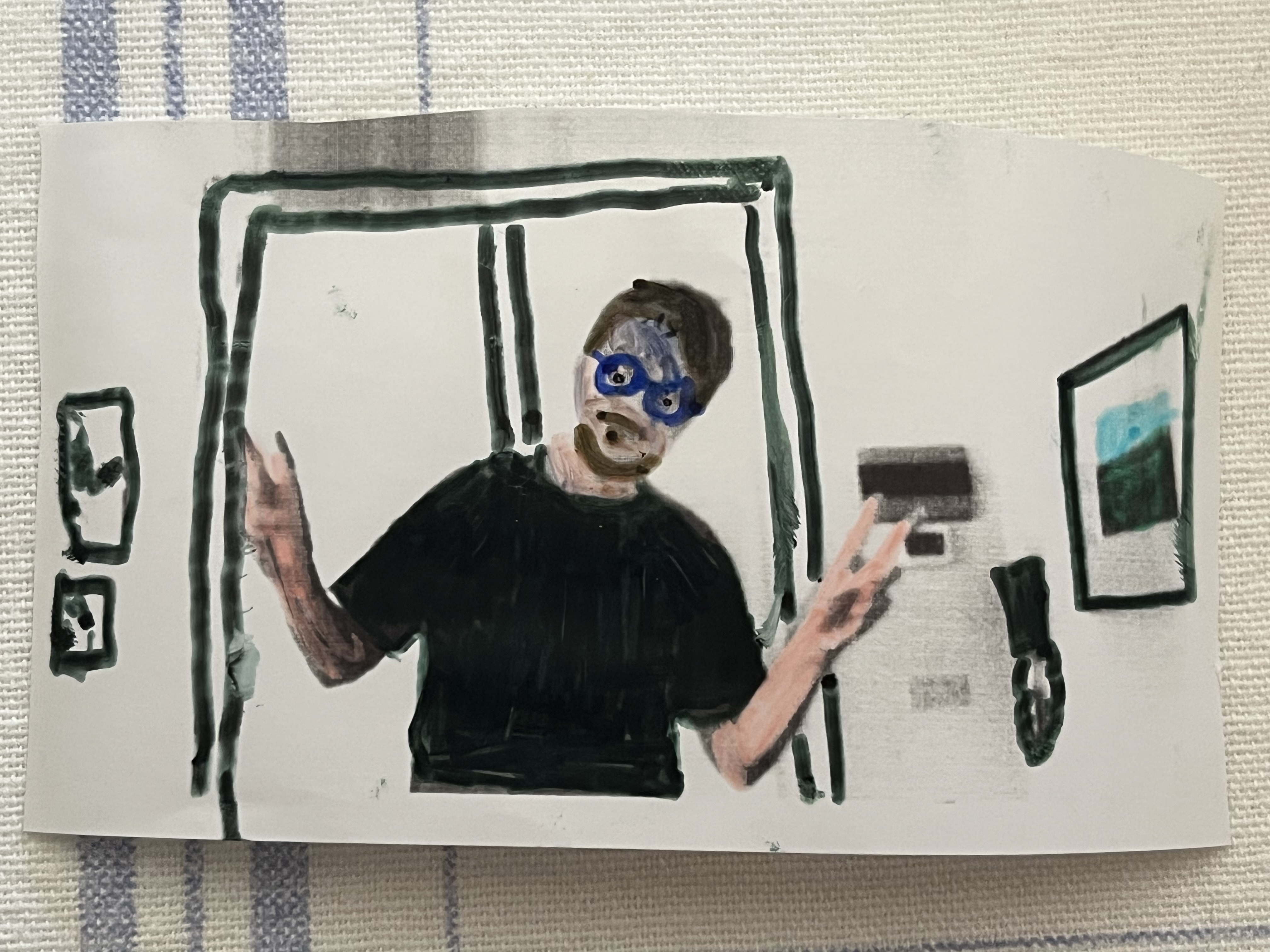
About
Marketing Director · Lecturer · Irene Media · Episteme Advisory
Claudio Cammarano leads marketing at De Agostini Libri and is co-founder of Irene Media. With twenty years of experience in Italy’s leading publishing groups, he has led editorial marketing, brand positioning and digital transformation strategies. He took part in some of the turning points of Italian publishing, from the joint book-and-newspaper sales of Repubblica to the Fifty Shades phenomenon and the acquisition of Rizzoli by Mondadori. University lecturer at Università Cattolica di Milano, Master Co.Se (Università di Parma) and Università degli Studi di Bergamo; formerly at Scuola Holden. Author of Il mercato del libro (Solferino / Scuola Holden). Academic background in semiotics and philosophy of language; MBA from Hult International Business School.
Selected experience





I lead marketing at De Agostini Libri and teach at three universities. My work sits at the point where publishing meets technology: how a book is sold today, and how you verify what a machine claims.
I have been through some of the turning points that reshaped the industry: the joint book-and-newspaper sales at Repubblica, when the newsstand became a bookshop; the shift of advertising from print to digital at Seat PagineGialle; the Fifty Shades phenomenon at Mondadori, a commercial case without precedent; Rizzoli and its acquisition by Mondadori — market consolidation seen from inside both sides; the transformation of DeA Planeta into De Agostini Libri. Each time, the same question: how is the way content finds its readers changing?
That question calls for an interdisciplinary approach: out of necessity, not fashion. Contemporary publishing cannot be understood through a single framework. The premises I start from are: semiotics, to decode how the grammar of content changes; economics, because producing content without questioning the business models is a way of getting hurt; Kahneman and behavioural economics, to understand how our mind reasons — built for adaptation, not for understanding phenomena; Taleb and his explorations of probability, to navigate uncertainty among geopolitical black swans; Bayes' theorem, to update beliefs about consciousness, mind and the cognitive sciences in an era of infinite AI production.
In my university courses I often problematise Kotler: does global marketing still work in a balkanised internet? How do you build strategy when national digital silos replace the open web? I explore new publishing business models (podcasts, YouTube, digital platforms, the creator economy) and write on my Substack, The Abstract, where I publish analyses that cross current trends with epistemological rigour.
The project I am working on now is called Validating AI. Language models produce assertions without establishing what kind of assertion they are producing: they can falsify a causal premise and tell a correlation from a mechanism, but they do not decide, before answering, what genus the thing they are about to assert belongs to. And internal certification of that step cannot be verified from outside. The right question is not "how does it work inside?" but "how do you check the output after it has been produced?". Man in the loop alone is not enough: a reviewer without a protocol telling them which question to ask first inherits exactly the same category error. I am building a post-cognition framework: a validation protocol specified independently of the model and applied to outputs after generation, which reconstructs from the output itself the ontological commitments the system does not represent. The goal is a taxonomy of epistemic errors, a test corpus and a methodological proposal intended for academic publication.
My audience: managers, publishers, strategists and creators who want to understand why the rules are changing, not just how to adapt.
I also write The Abstract, a newsletter on content industries, AI and media from a European perspective.


Teaching



Past teaching

Publications

For invitations to talks, teaching and research collaborations: claudio@claudiocammarano.com.
The site also has an Italian side: essays on publishing, epistemology and the geopolitics of content. How the two sides fit →